Clearfield County History
Clearfield County History

Clearfield County Through the Years
Clearfield County Through the Years
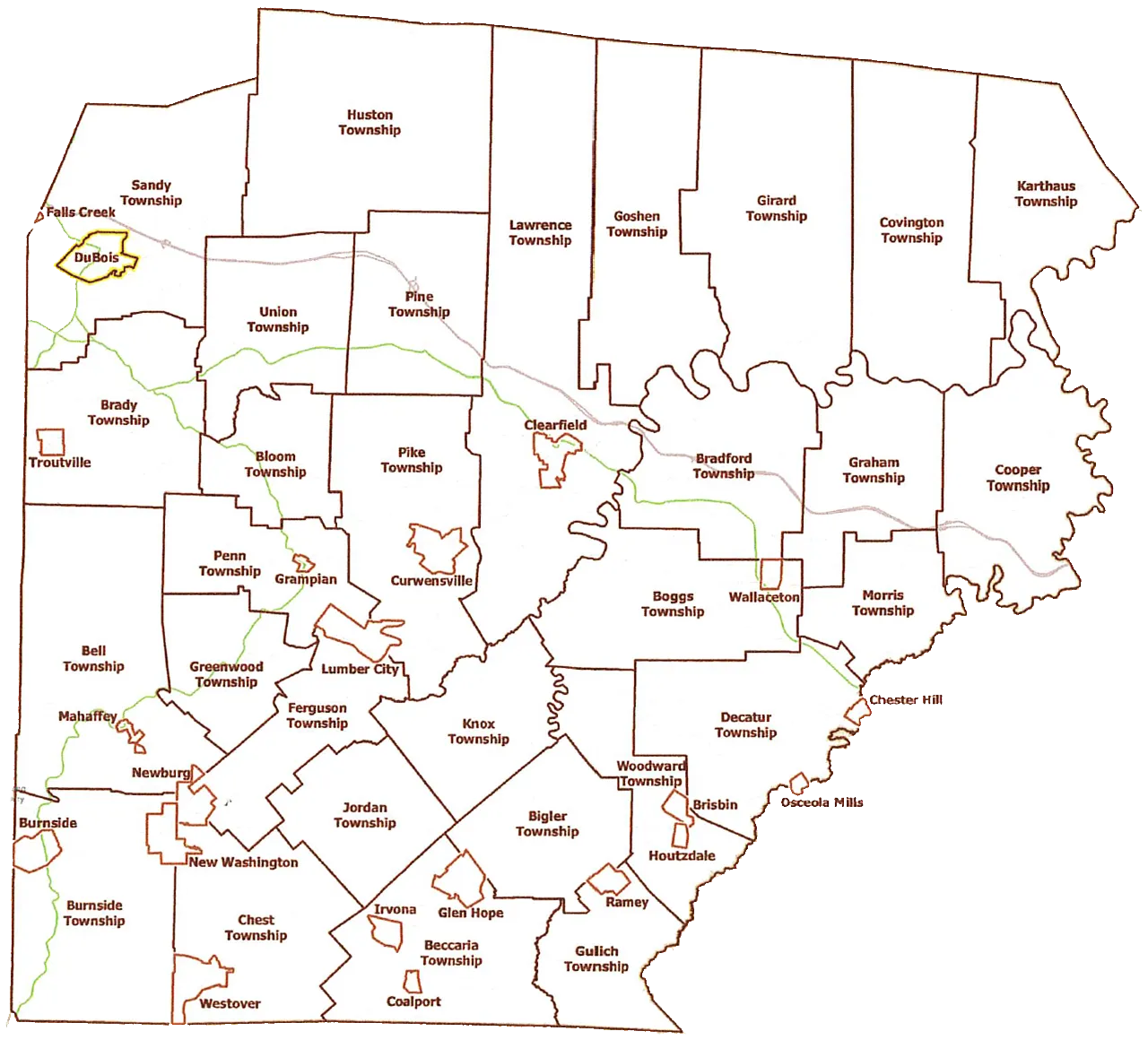
Clearfield County was formed from parts of Lycoming and Huntingdon counties organized on March 26, 1804, approved by Governor McKean, the year that the Lewis and Clark expedition began their trip up the Missouri River to explore the west. Our first township was called Chincleclamousche Township, named from the Native American word for what became the county seat, Clearfield. Beccaria and Bradford Townships were next to follow. Clearfield County’s first courthouse was built in 1814, the year that the treaty was signed to end the War of 1812. It was replaced by the present structure in 1862 while our nation was fighting the Civil War.
Of course, our county’s story begins long before this, before highways and towns were built. The presence of Native American people has been documented by archeological work done in the county, and the West Branch provided a contact point between military forces during the French and Indian War (1754-63) and during our nation’s fight for independence (1775-1783). Early settlers used the West Branch of the Susquehanna River and the Chincleclamousche Trail (part of what became known as the Great Shamokin Path) to access the forests and glens of what was to become Clearfield County.
Clearfield County is part of the Appalachian Mountain region, regionally referred to as the Allegheny Mountain Plateau. The county is geographically significant in that the northwestern part of the county, near DuBois, is the continental divide with its waters flowing westward toward the Ohio River. This feature was a source of early exploration.
Early industry revolved around our natural resources. The timber of Clearfield County was a source of income for our earliest settlers. The West Branch provided a way to get the great timber resources to markets in the east. Later development of local sawmills provided needed income and provided lumber for development of local communities. DuBois, our largest town was built around the sawmills of John DuBois, and the names of many small mill towns dot our landscape. Coal and eventually fire clay became a driving force in Clearfield County’s local economies, shaping towns and other industry leaving a lasting impact on the area, still visible and impactful today.
Municipalities of Clearfield County